A from-scratch implementation of the Transformer architecture and a custom Autograd engine in pure C, built to deeply understand how modern deep learning infrastructure works at the metal.
This project implements the core components of a Transformer encoder alongside a functional Forward Pass Computational Graph Engine & Backpropagation to update gradients using only standard C—completely (having custom Tensor library) free of PyTorch, TensorFlow, or high-level frameworks.
The goal is to explore exactly how attention-based models and automatic differentiation operate at the lowest level, covering raw tensor memory management, strided layouts, explicit DAG tracking, and custom backward passes.
The model successfully tracks gradients, learns, and minimizes loss over training iterations:

When running forward passes inside miniTorch, the system natively builds and tracks a directed acyclic graph (DAG) of mathematical operations. Below is an execution pass exported directly by the framework via Graphviz:

Intermediate nodes capture execution states, maintaining parent-child dependencies directly within our raw memory allocation layers to facilitate topological sorting during backpropagation.
tensor.c/tensor.h: Core tensor primitives, data storage layouts, memory allocation, and strided operations.attn2.c/attention2.h: Multi-Head Attention forward pass logic, shape transformations, and backward pass gradient calculations.ln.c/layer_norm.h: Layer Normalization implementation for training stability.ffn.c/feed_forward_nn.h: Feed-Forward Neural Network blocks (Linear transformations and activations).main.c: Framework entry point orchestrating tensor initialization, graph building, and model execution.
I'm actively building out and hardening the Backward Pass Engine written purely in C. This expansion moves the project from a forward-only inference engine into a dynamic training framework focusing on:
- Topological Sorting: Evaluating computational graph nodes in reverse topological sequence to guarantee flawless gradient propagation.
- Gradient Accumulation: Ensuring calculated gradient shapes match exact raw tensor tensor dimensions, handling non-contiguous blocks via stride computations.
- Memory Arena Optimization: Consolidating dynamic graph node allocations into flat arenas to eliminate heap fragmentation during execution loops.
- A C99-compatible compiler (
gccorclang) - Bash shell environment
- Graphviz (Optional, for rendering
.pngcomputation graph pipelines)
Compilation of all internal modules alongside main.c is fully automated via a shell wrapper. Build the project and execute the tensor pipeline in a single command:
# Clone the repository
git clone [https://github.com/umairgillani93/miniTorch.git](https://github.com/umairgillani93/miniTorch.git)
cd miniTorch

# Ensure script execution permissions
chmod +x run.sh

# Compile modules and execute main engine
./run.shModern ML frameworks abstract away many critical implementation details. While convenient, they often hide how models actually work internally.
This project focuses on learning by building.
By implementing Transformers directly in C, we gain insight into:
- How tensors are represented in memory
- How matrix multiplications power neural networks
- How Self-Attention operates internally
- How Multi-Head Attention splits and combines representations
- How Layer Normalization stabilizes training
- How Feed Forward Networks transform token embeddings
- How Transformer Blocks combine these components together
The project is designed for developers who want to understand the mechanics behind modern AI architectures rather than just using high-level libraries.
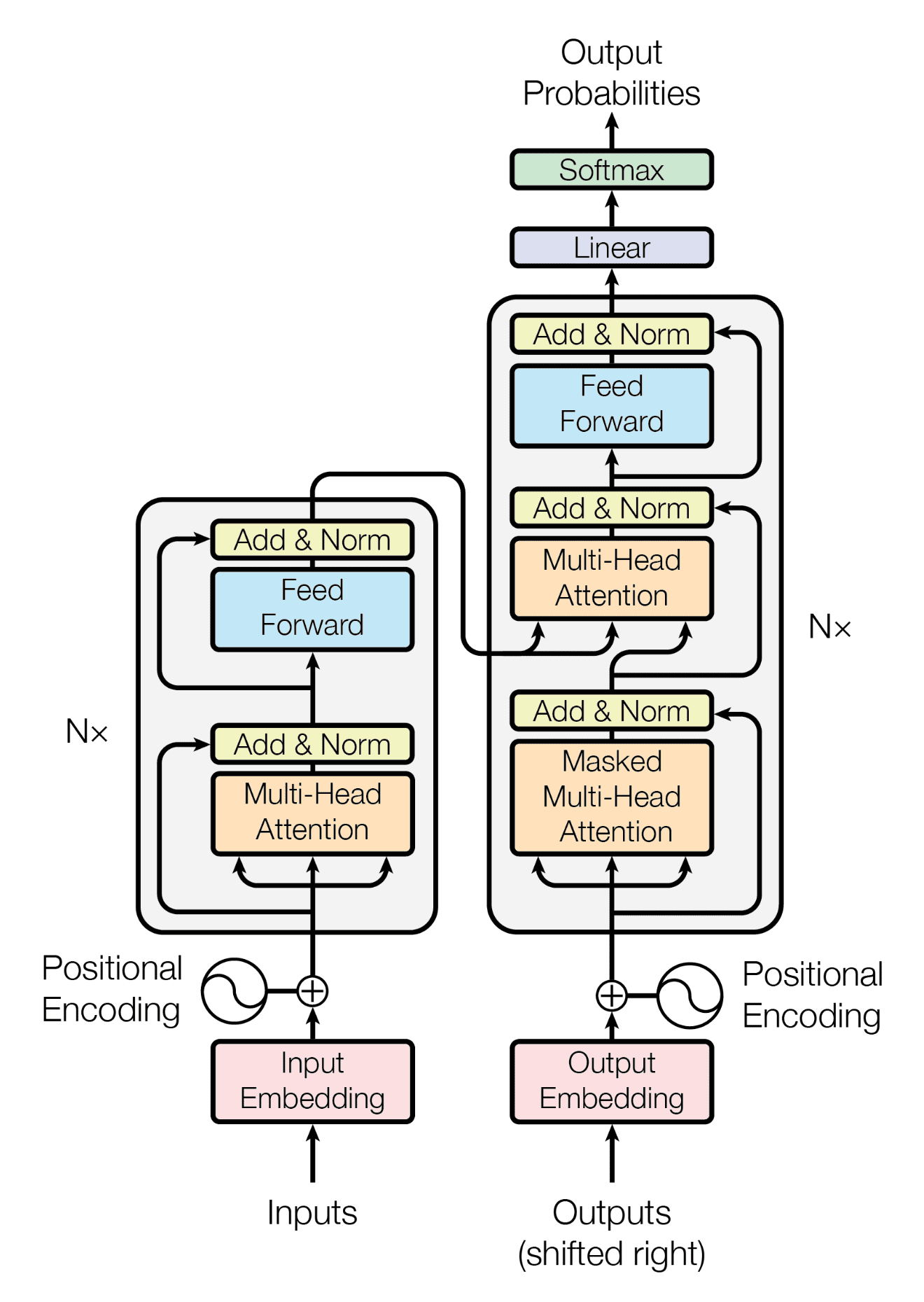


- Pure C implementation
- Minimal dependencies
- Educational clarity
- Modular architecture
- Easy experimentation
The code is intentionally written to be readable and educational, rather than hyper-optimized.
Implementing deep learning architectures in C provides several advantages:
- Full control over memory layout
- Better understanding of tensor operations
- Insight into how ML frameworks work internally
- Strong foundation for building custom deep learning libraries
Planned improvements include:
- Backpropagation support
- Training loop implementation
- Optimizers (SGD / Adam)
- Positional encoding
- Token embeddings
- Autograd engine
- GPU acceleration (CUDA / Metal)
- Loading pretrained weights
- Full Transformer stack
This repository is intended for:
- Engineers learning how Transformers work
- Developers interested in low-level deep learning systems
- Students studying neural network architectures
- Researchers exploring minimal ML implementations
- Vaswani et al., 2017 — Attention Is All You Need
MIT License
Umair Gillani Email: Umairgillani93@gmail.com Linkedin: https://www.linkedin.com/in/umairgillani93/
AI Engineer interested in low-level deep learning systems and building machine learning frameworks from scratch.
This project is licensed under the GNU GPL v3 License.