Tired of installing 1000 dependencies, just to run unit tests? Teevi is the essence of unit testing in JavaScript.
It allows unit testing of JS without additional dependencies, right in your browser. Teevi has almost the same syntax as Mocha with Chai but is a hundred times smaller.
Demo: http://shaack.com/projekte/teevi/test/
- Create the test script
MyTest.js
import {describe, it, assert} from "../src/teevi.js"

describe("Teevi test demo", () => {
    it("will not fail", () => {
        assert.true(2 * 2 === 4)
    })
    it("will fail", () => {
        assert.equal(4 + 2, 42)
    })
})- Create a
test/index.htmlto run the tests in your browser
<!DOCTYPE html>
<html lang="en">
<head>
    <meta charset="UTF-8">
    <title>Tests</title>
</head>
<body>
<script type="module">
    import {teevi} from "./src/teevi.js"
    import "./MyTest.js"
    teevi.run()
</script>
</body>
</html>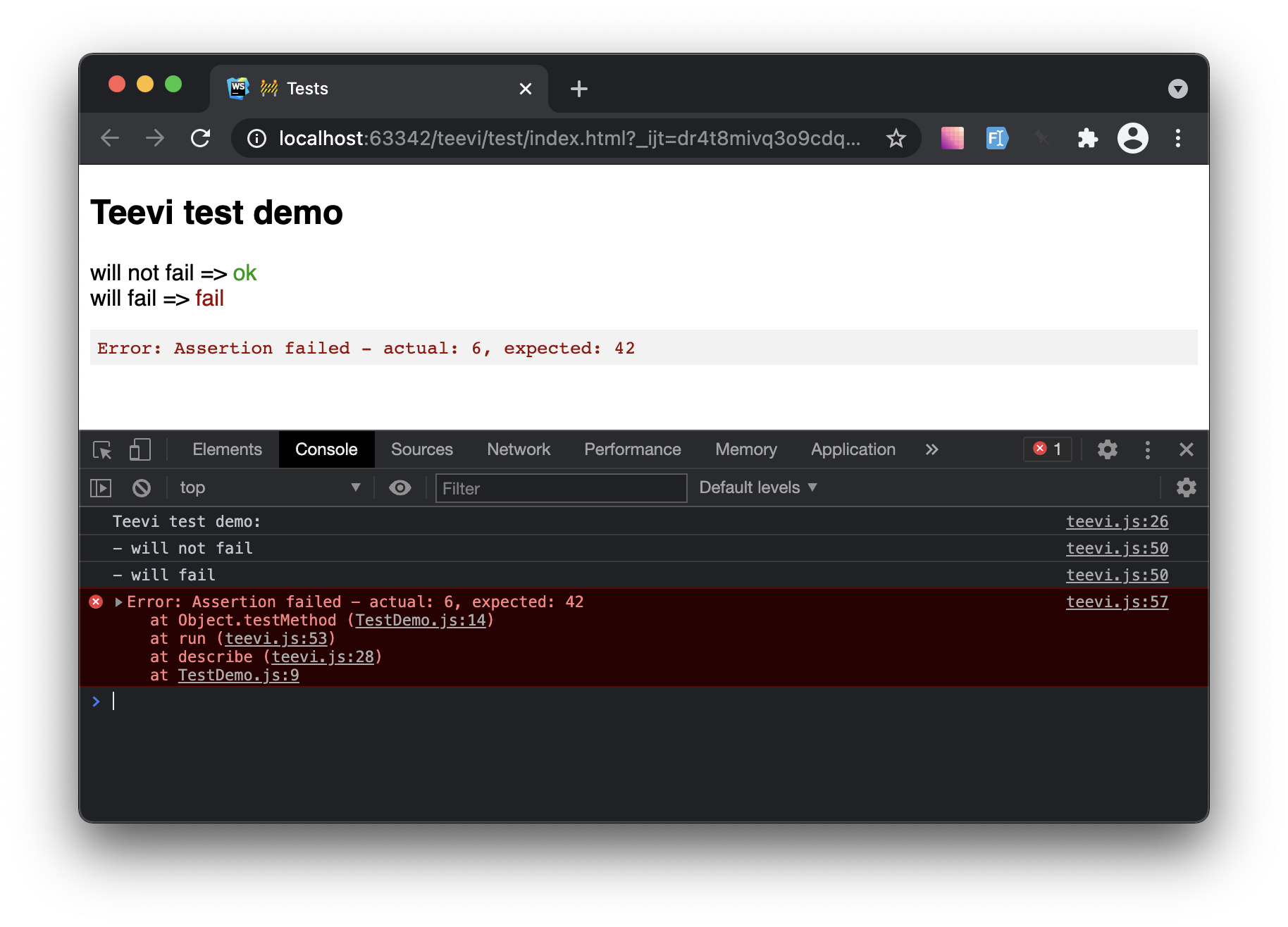
When teevi.run() finishes it appends a summary line to the bottom of the page
(green "All N tests passed" or red "N tests, X passed, Y failed") and scrolls the
viewport to the latest result while tests stream in, so long suites stay readable.
Use it.only(condition, testMethod) to run only these tests in your test module.
assert.fail(message)assert.true(condition, message)assert.false(condition, message)assert.equal(actual, expected, message)assert.notEqual(actual, notExpected, message)assert.throws(fn, message)— passes whenfn()throws- use
reject(message)from an asyncPromise(see example below)
You can also test async calls, with the use of promises.
it("should test async", () => {
    return new Promise((resolve) => {
        setTimeout(() => {
            // `resolve`, if test succeeds
            resolve()
        }, 500)
    })
})
it("should fail async", () => {
    return new Promise((resolve, reject) => {
        setTimeout(() => {
            // in Promises use `reject()`, not `assert`
            reject("failed, because of testing")
        }, 500)
    })
})