


I'm a technical artist and generative AI engineer. I build the tools that sit between artists and their software: animation editors, pipelines that move assets between DCC apps and game engines, and ComfyUI nodes that turn generative workflows into production assets.
- Animation tools: building Rigby2D, an open-source 2D skeletal animation editor for games, films and interactive experiences
- Pipelines: connecting Maya, Blender and Unreal Engine with asset, material and model bridges
- Generative 3D: ComfyUI nodes that turn AI output into production assets, PBR materials and managed models
- Open standards: glTF 2.0, MCP servers for AI assistants, Python scripting
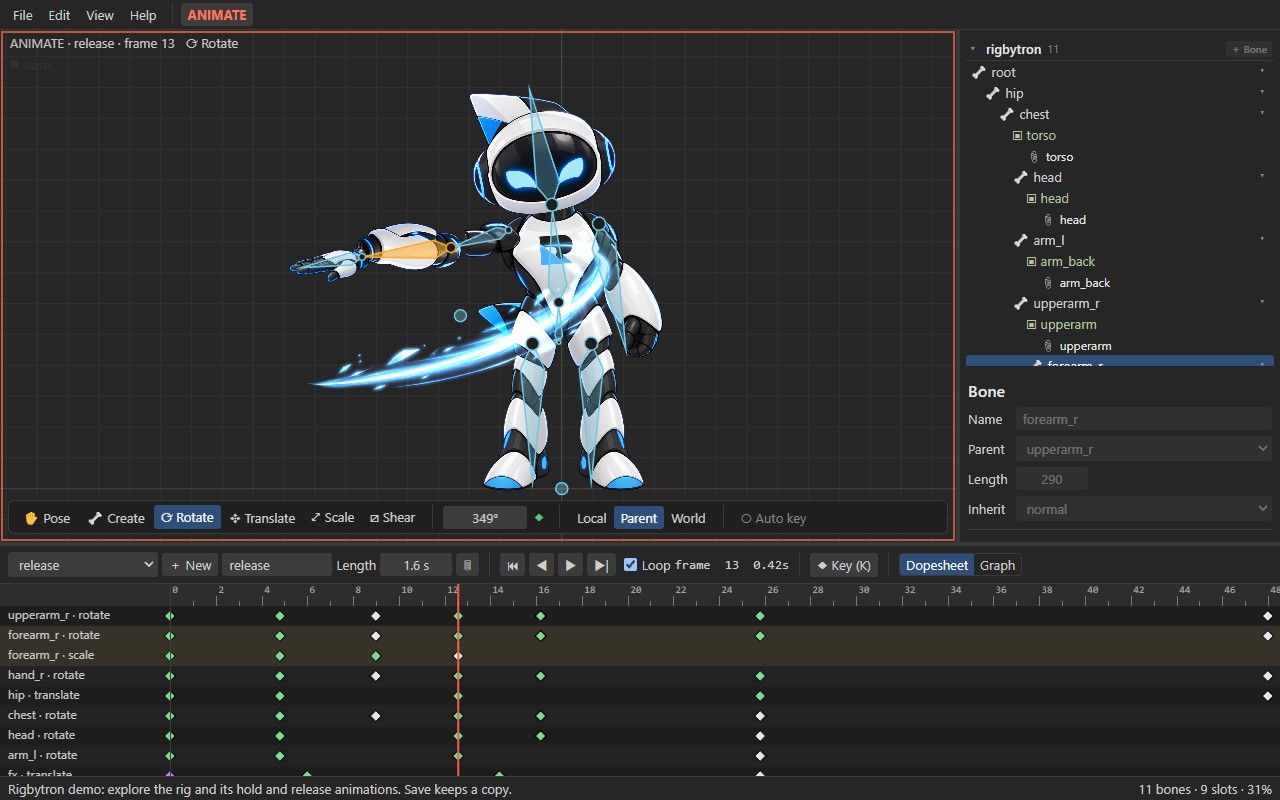
Open-source 2D skeletal animation for games, films and interactive experiences.
- AutoRig: turns a layered PSD into an editable rig in one step.
- Retargeting: reuses animations across characters.
- Film output: renders transparent PNG, WebM and MP4 with audio and lip-sync.
- Runtimes: ships runtimes for JavaScript, Rust and Godot 4.
- AI assistants: includes an MCP server.


| Project | What it does |
|---|---|
| Mayflower-glTF | Standards-compliant glTF 2.0 import and export for Autodesk Maya |
| ComfyUI-ModelRouter | Detects, downloads and routes a workflow's missing models into the right ComfyUI folders |
| ComfyUI-AssetSync | Sends AI-generated 3D assets from ComfyUI to Blender, Maya and Unreal Engine, with materials |
| ComfyUI-MaterialSync | Syncs PBR texture maps between ComfyUI and Blender, Maya and Unreal Engine |
| ComfyUI-SVG-Rasterizer | Rasterizes SVG inputs to high-resolution image and mask tensors in ComfyUI |
Languages




Art and game tools





Generative AI and platforms



Building in the open: issues, ideas and pull requests are welcome on any of these projects.