I enjoy building things, breaking things, and figuring out how to make them work again (hopefully).
I'm studying Software Engineering at the University of Newcastle and working as a Junior Machine Learning Engineer at Orica Digital Solutions. I'm also working on stereo depth and pose estimation for NUbots, an autonomous soccer robotics team.
Orica Digital Solutions · NUbots · University of Newcastle





Personal Project
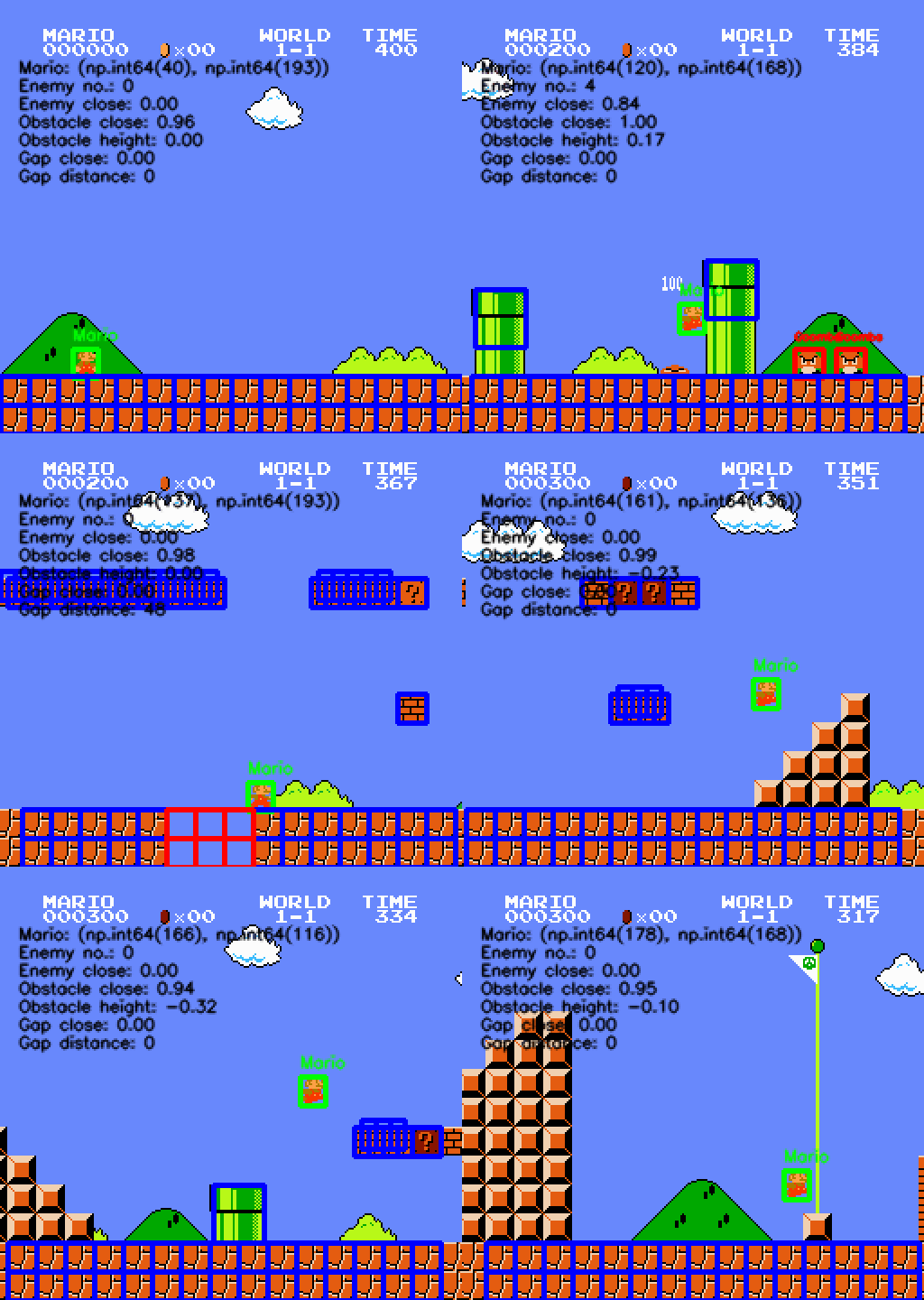
- Built a vectorised sprite-detection pipeline using OpenCV.
- Trained an ε-greedy reinforcement-learning policy.
- Achieved the first successful level completion after 17 epochs.
- Built around
gym-super-mario-bros.
Started by training an agent to complete World 1-1, succeeding in under 20 epochs. From there, I extended training to World 1-2, using only sprite information and experience from the first level. I also explored how much training data was needed to generalise to the remaining levels.
This was developed as a proving ground for a larger reinforcement-learning project.
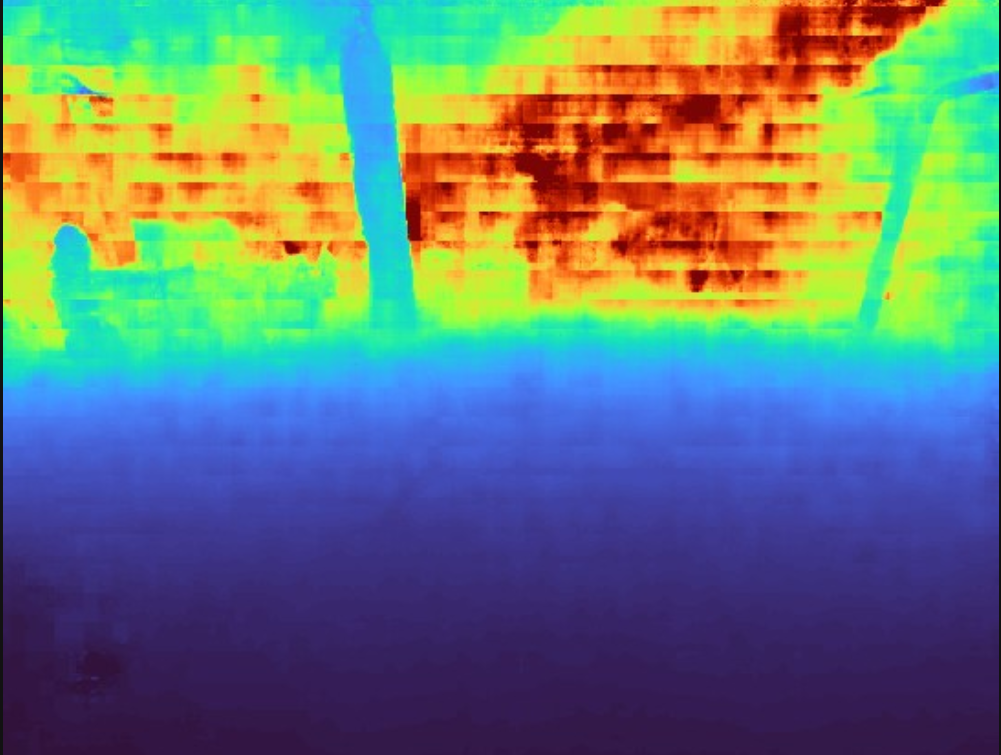
Booster default depth output |
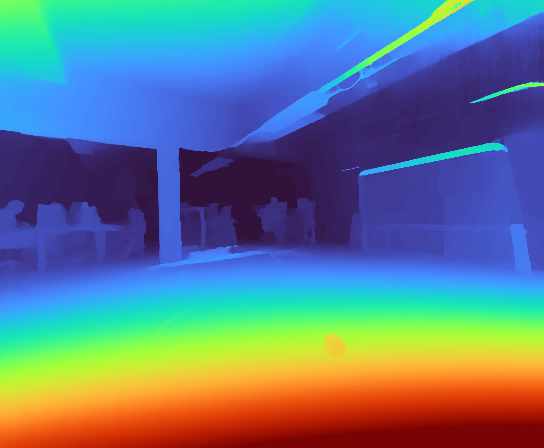
Fast Foundation Stereo on the RDK X5 |
A few things I'm currently working on:
- Evaluating stereo depth models against the depth data already provided by the robot, including Fast Foundation Stereo, Lite Any Stereo V2 and RAFT-Stereo.
- Comparing segmentation models to find a balance between inference speed and accuracy.
- Testing models directly on the robot's hardware (RDK X5 and Jetson Orin NX) to evaluate real-time performance.
- Developing a pipeline that detects a robot in one camera view, then uses stereo depth and part segmentation to estimate its 3D pose.
- Building a labelled dataset of robot body parts (head, shoulders, torso and feet) for per-part segmentation and pose estimation.
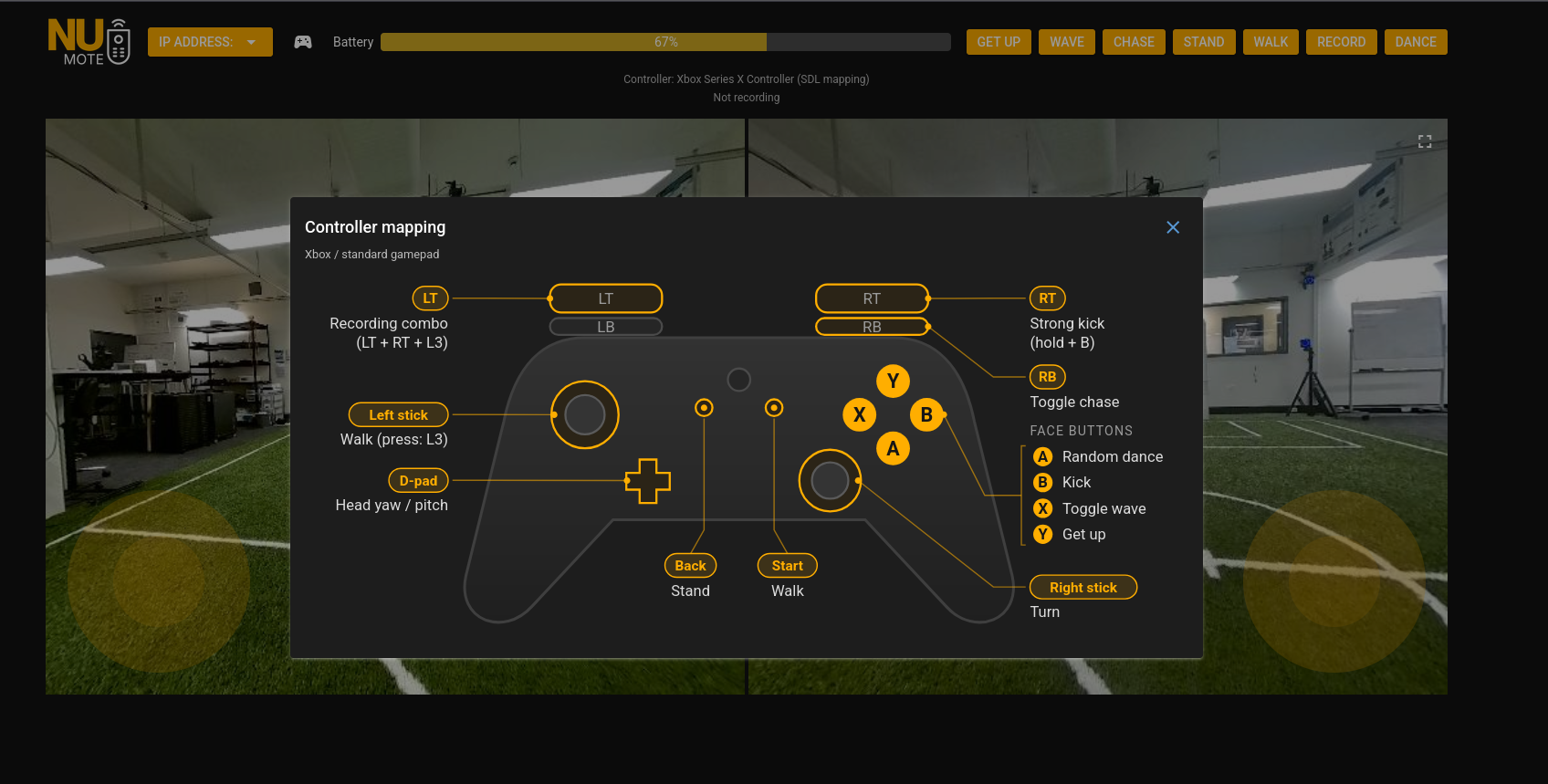
- Browser-based remote control interface for Booster K1 robots, built with Python and NiceGUI.
- Real-time robot control using on-screen joysticks or Xbox and Nintendo Switch controllers, with adjustable movement speed and head positioning.
- Live camera streaming with support for RGB, depth and object detection feeds through a custom ROS 2 bridge.
- Robot communication and control through gRPC, Protocol Buffers, WebSockets and TCP.
- Trigger built-in robot behaviours, including dancing, kicking, waving, getting up and ball chasing.
- Video recording, automatic robot discovery and SSH-based deployment and management of the custom camera bridge.
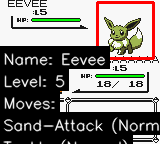
- Uses Open-CV to detect Pokemon and then web scrapes Bulbapedia for moveset.
- Example detection output shown above, featuring Eevee.
The goal is to eventually teach an Agent to play through the first generation of Pokemon.
The first goal is to leave Pallet Town, but really it's beating Brock. The second goal would be to beat Misty + Lt. Surge.
But the overarching goal with this project is to dream to beat the Elite Four, but then zero-shot Generation II based on nothing but Open-CV teaching an RL policy to detect Pokemon Sprites + knowing type weaknesses/strengths.
An Android geofencing app built for Orica Hackathon #4 (2025).
- Uses GPS enter and exit events to track geofenced areas.
- Uses device tilt data to help identify and map potential danger zones.
- Built from scratch in Kotlin during the hackathon.