
More than a research lab, we are a scientific community aiming to understand how the brain computes the mind. We conduct theoretical and computational research on the biophysical bases of cognition and behavior. We are currently seeded at the Center for Neuroscience and Cell Biology, University of Coimbra, Portugal.
Our research combines mathematical modeling, numerical simulations, and theoretical analysis to explore neural dynamics, synaptic and cellular plasticity, and cognitive processing in biophysical spiking networks, spanning multiple levels of analysis -- from individual neurons and synapses to networks and systems -- with a particular focus on:
- Biophysically detailed neural simulations
- Cognitive modeling and neural information processing
- Neural dynamics in learning and memory
- Analysis methods for neural and behavioral data
- Computational principles underlying brain function
Visit our website to learn more about our research.
 A comprehensive Python package for analyzing multi-electrode array (MEA) data with a focus on population dynamics, feature analysis, and comparative studies across experimental conditions. GitHub Repository ·
|
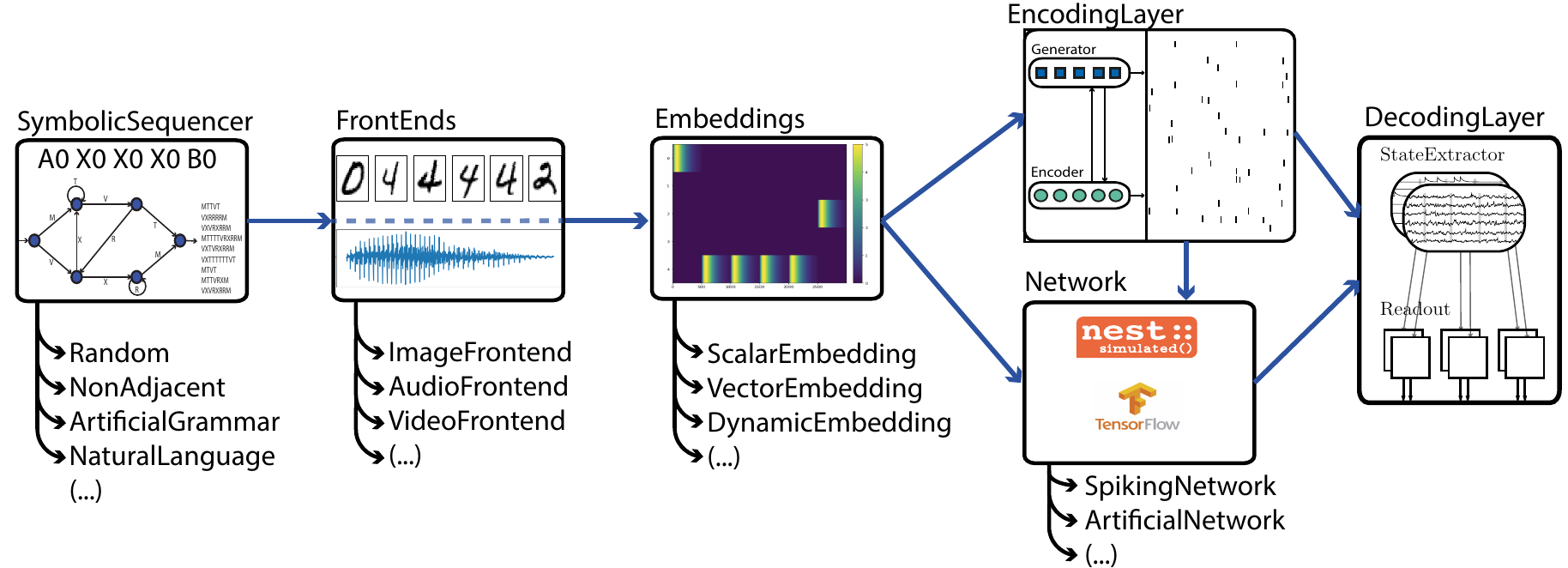 A Python framework for designing, simulating and analyzing functional neural architectures. 
|
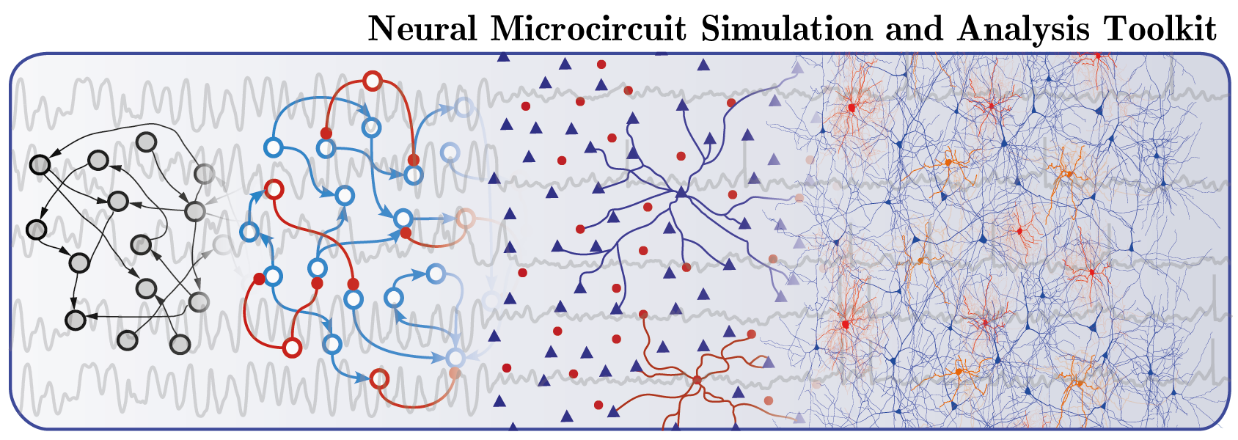 A toolkit for simulation and analysis of neural microcircuits. GitHub Repository · Zenodo DOI |
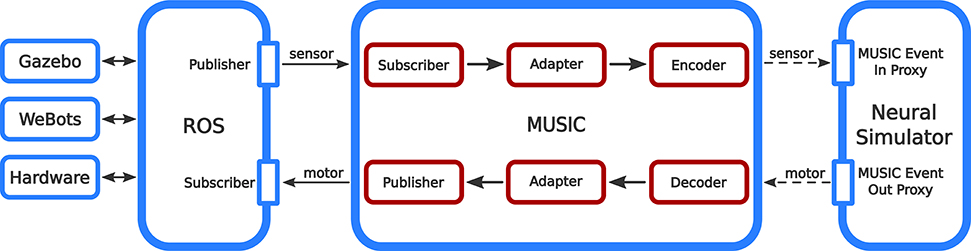 An interface between the Robot Operating System (ROS) and the MUSIC library for neural simulators. GitHub RepositoryWeidel et al. (2016) Front. Neuroinform. 10:12 · Jordan et al. (2019) Front. Comput. Neurosci. 13:55 |
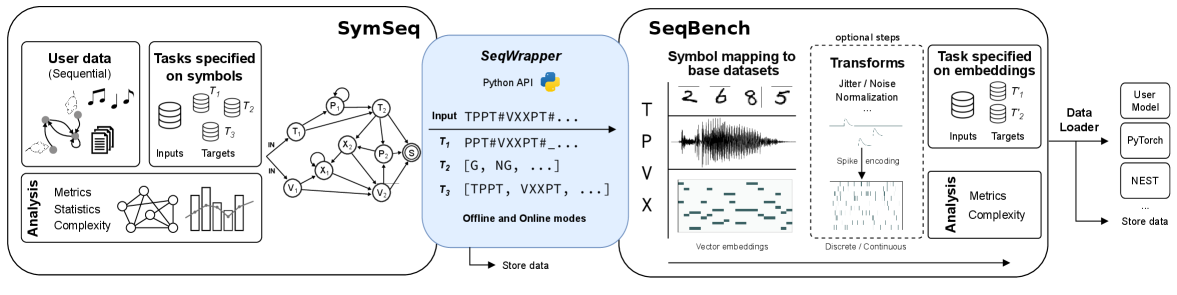
The SymSeqBench project provides a unified framework for the generation and analysis of rule-based symbolic sequences and datasets, bridging formal language theory, psycholinguistics, and artificial intelligence. It comprises two complementary tools: SymSeq for generating and analyzing structured symbolic sequences, and SeqBench for benchmarking sequence learning in artificial systems. See Zajzon, Bouhadjar, Fabre et al. (2024) for details.
- SymSeq -- Python library for defining, generating, and analyzing symbolic sequences
- SeqBench -- Transforming, embedding, and benchmarking symbolic sequences
- SelectivBench -- Dissecting linear recurrent models: how different gating strategies drive selectivity and generalization
For a complete list, see our resources and publications pages.
|
Signal denoising through topographic modularity of neural circuits. Zajzon et al. (2023) eLife · Code |
Toward reproducible models of sequence learning: replication and analysis of a modular spiking network with reward-based learning. Zajzon et al. (2023) Front. Integr. Neurosci. · Code |
Leveraging heterogeneity for neural computation with fading memory in layer 2/3 cortical microcircuits. Duarte & Morrison (2019) PLOS Comput. Biol. · Code |
|
Encoding symbolic sequences with spiking neural reservoirs. Duarte et al. (2018) IJCNN · Code |
Self-organized artificial grammar learning in spiking neural networks. Duarte et al. (2014) CogSci · Code |
 Project resources for the 2025 edition of the Summer School in Computational Biology at the University of Coimbra. Covers spiking neural network simulations, population dynamics analysis, and machine learning approaches for finding structure in neural data. Course Website · GitHub Repository |
|
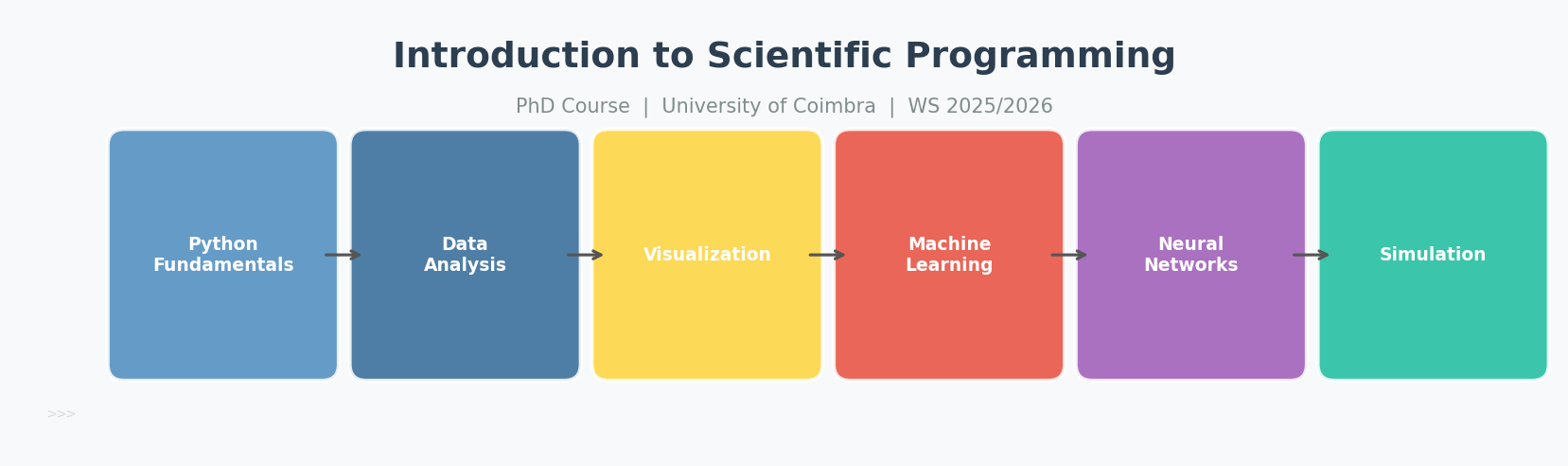 Advanced course for PhD students in integrative neuroscience at the University of Coimbra. Covers Python programming, data analysis, visualization, numerical computing, machine learning, neural networks, and simulation -- with AI-assisted learning and professional software development practices. idpIN Programme · GitHub Repository |
|
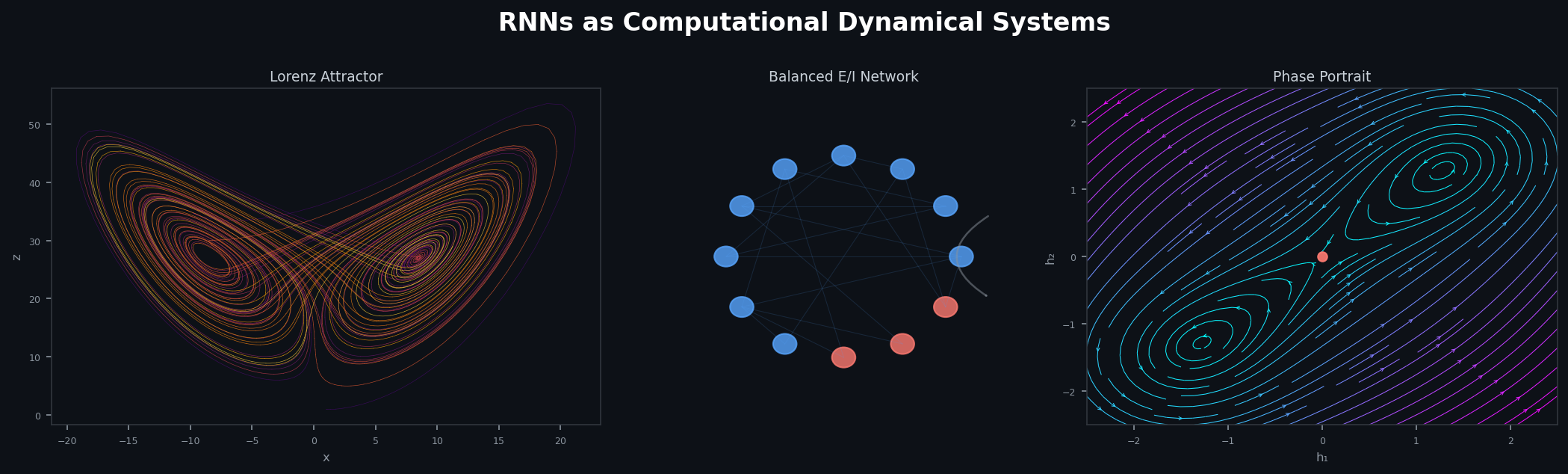 A hands-on tutorial for the "Systems & Computational Neuroscience" course at CNC-UC. Students implement temporal prediction of the Lorenz-63 chaotic attractor across multiple architectures -- continuous-time RNNs, balanced rate networks, and biologically plausible balanced spiking networks -- using PyTorch, Neural ODEs, and dynamical systems analysis. idpIN Programme · GitHub Repository |
|
 Materials and resources from the 2024 Summer School in Computational Biology at the University of Coimbra. Course Website · GitHub Repository |
Materials from the EITN Spring School in Computational Neuroscience. GitHub Repository |
We're always looking for passionate researchers, students, and collaborators interested in computational neuroscience and neural computation. If you're interested in our work:
- Explore our research projects
- Contact us about collaboration opportunities
- Check out our educational resources
- Contribute to our open-source repositories
If you use our code or models in your research, please cite the relevant paper as indicated in each repository's README.